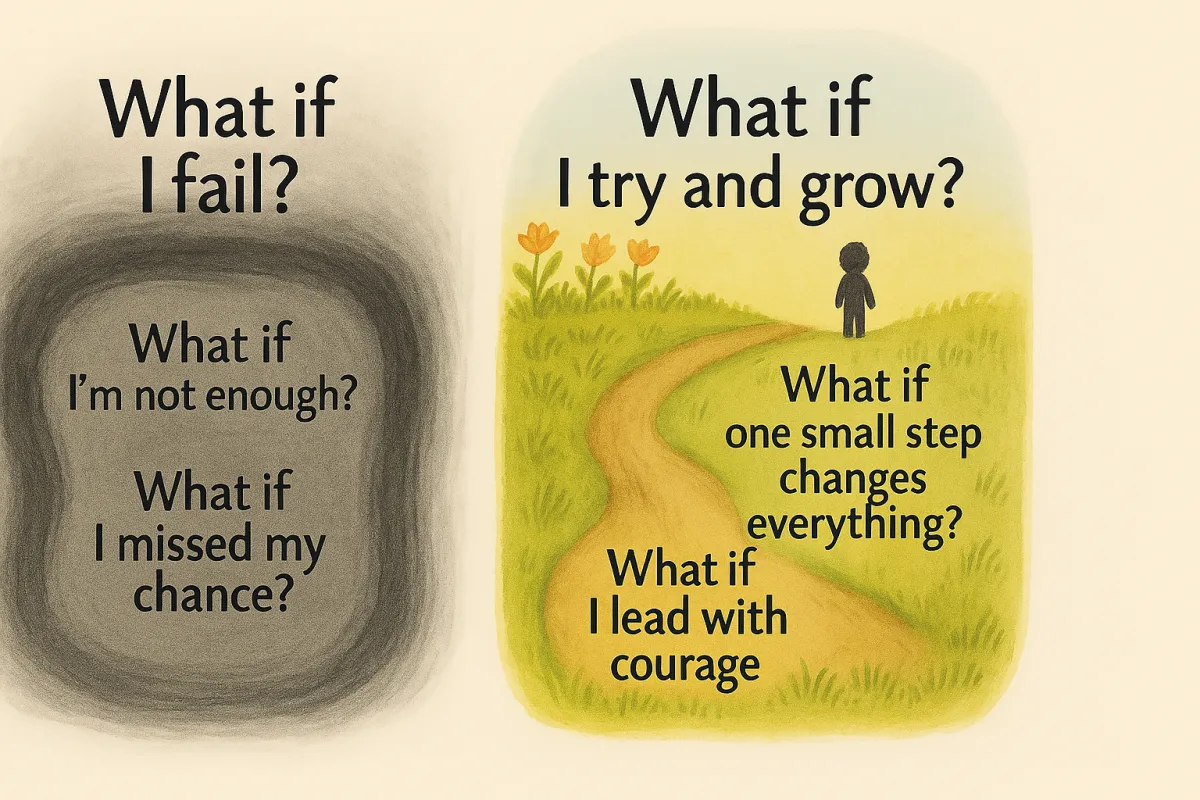
The "What If" Rabbit Hole (And Why You Might Want to Crawl Back In)
We all know the “what if” rabbit hole. It usually starts quietly:
What if I had taken that job? Would I be happier now?
What if I had spoken up in that meeting?
What if I’m not as good as they think I am?
And suddenly, you're 27 layers deep, questioning every life choice from the past decade while grabbing for the chip bag for the third time. The “what if” game is sneaky like that. It feels like reflection, but often turns into regret.
Research shows this isn’t just personal, it’s psychological. According to a 2022 study, people with a tendency to ruminate (aka play the “what if” game on repeat) are more likely to experience higher levels of anxiety, depression, and self-doubt. That kind of thinking trains our brains to scan for problems, not possibilities.
But what if (yes, pun intended) the problem isn’t the question, it’s the direction we take it?
What if I made one small shift today?
What if I started acting like the leader I want to become?
What if this week, I just… tried something new instead of talking myself out of it?
This version of “what if” doesn’t ignore the hard stuff, it just points us forward instead of backward. It taps into a different kind of psychology; one rooted in hope theory. Research from psychologist Charles Snyder suggests that hope is built on two things: having a goal and believing you have the agency and pathways to pursue it. That sounds a lot like flipping the “what if” script to me.
Let’s look at the two versions side by side:
The Spiral Version:
What if I fail and everyone sees?
What if I speak up and sound foolish?
What if I’ve already missed my chance?
The Growth Version:
What if I take one step toward that dream that keeps whispering at me?
What if I give myself permission to do it scared?
What if I stop waiting for perfect and just get started?
Same game. Different direction. And research supports this shift. Studies in The Journal of Positive Psychology show that imagining positive future scenarios actually increases motivation and persistence, especially when paired with realistic action planning.
And if you’re a leader (or want to be one) this matters even more. Because your internal dialogue? It doesn’t stay internal for long. The “what ifs” you carry impact how you lead, how you respond under pressure, and how your team sees themselves. Leadership starts in the mirror. And if you're constantly second-guessing your own steps, it’s tough to inspire confidence in others.
The truth is, many of us are quietly putting things off. We wait for clarity, for confidence, for the moment when everything feels aligned. But according to The Confidence Code by Katty Kay and Claire Shipman, confidence doesn’t precede action, it follows it. You don’t think your way into bold moves. You move your way into bold thinking.
So I’ll leave you with this:
What’s one “what if” you’ve been avoiding…
and what if you did something about it today?
Want help sorting through the spiral and turning it into a strategy?
Let’s talk. Coaching isn’t just about advice. It’s about clearing the noise so you can move forward with purpose.
Chat with us: https://site.dbcoachinggroup.com/strategy-6803


